
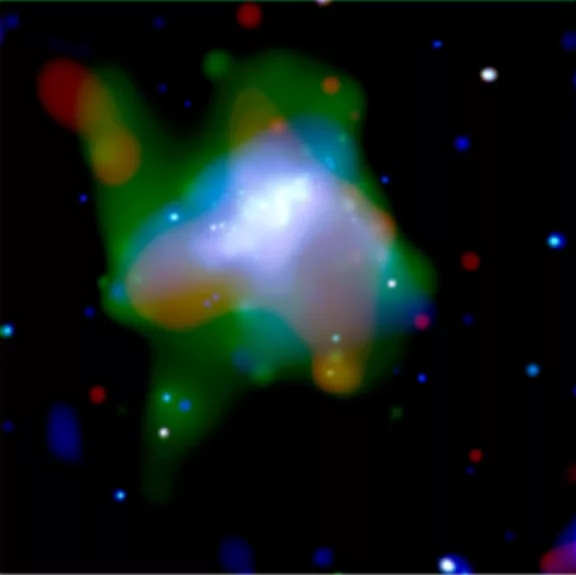
Chandra’s 27-hour observation of this dwarf galaxy allowed scientists to measure for the first time the concentration of oxygen, neon, magnesium, and silicon that are present in the disk of the galaxy and in large hot gaseous bubbles that extend above and below the disk. These bubbles, produced by a burst of supernova events, are rushing out of the galaxy at speeds of hundreds of thousands of miles per hour. They contain oxygen equal to the oxygen contained in 3 million suns.